CONTENT ANALYSIS
What the film is actually saying.
A real hook and seven cleanly segmented sections — the escalation reads in the signal. The soft spots: no formal ending after the final scene, and tension that dips across the longest takes.
- Synopsis
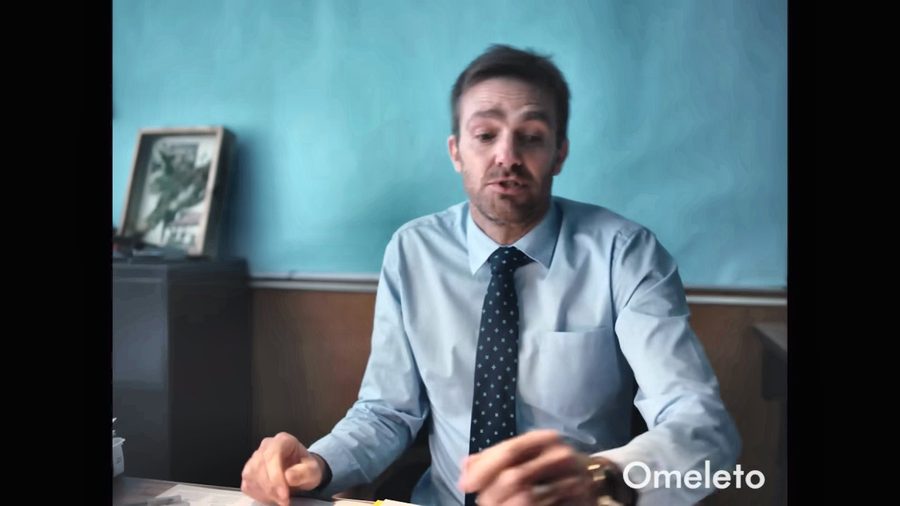
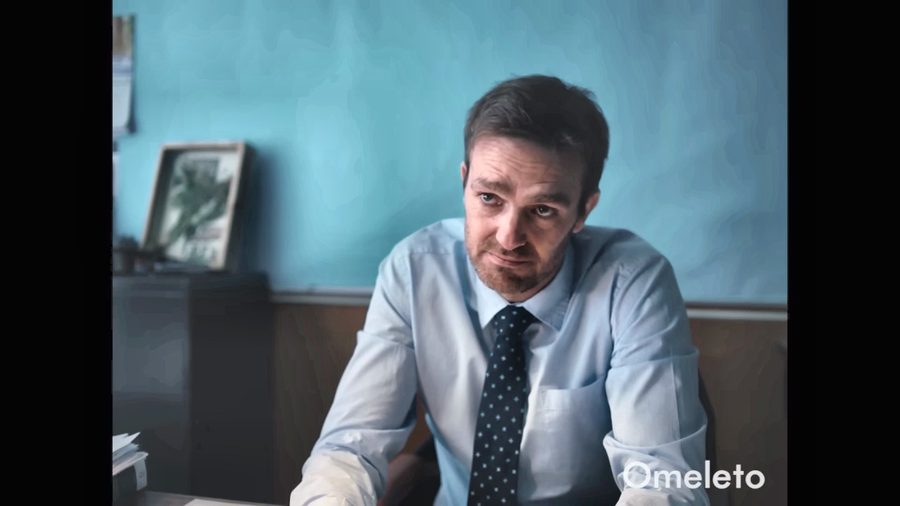
- Alice appears in Ben's classroom years after they last saw each other. What begins as warm catching-up — "Look at you, you look great" — tightens into a confrontation over a past wrong he refuses to own, an apology she came to extract, and a closing scene that plays out almost without words.
- Message
- An apology only means something if guilt is admitted — "apology implies guilt" is the line the film pivots on. Confronting the person who hurt you may be justice, and still not give you what you came for.
- Intended audience
- Festival and short-film viewers — Omeleto's drama audience, watching for performance and subtext rather than pace.
- Emotional arc
- Warm reunion → unease → open confrontation ("You are guilty") → a fragile apology at the climax → a quiet, unresolved coda.
- Themes
- guiltapologyjusticeconfrontationthe pastclosure
- Structure
- An intro card, a long two-hander build (the second section runs from 0:36 to 7:12), an escalation through three short confrontation scenes, then a three-minute aftermath and a near-wordless close. No formal outro.
- Strengths
- The escalation is patient — small talk curdles by degrees, never in one jump
- The stakes live in the dialogue's subtext ("Apology implies guilt. You are guilty.")
- Conventions spotted
- the single-location reunion-confrontation two-hander
- the ambiguous, dialogue-free closing beat
Ways to tighten it
Fix delivery before the next upload: master to ~−14 LUFS and re-export at a healthy AV1 bitrate — two export settings remove the report's two zeros · put a plate or stronger shadow behind any burned-in text (median contrast is 4.0:1 today) · the engagement measure dips across the long mid-film takes (61% of runtime in shots over 8 s) — a few earlier reaction cuts would hold tension without changing the film's pace.