COACHING REPORT · REAL EXAMPLE

So This is Peak Smartphone

Talking-head / tutorial MKBHD · 4.7M VIEWS · AUTO-DETECTED 100%
DURATION 13:17RESOLUTION 3840×1920FPS 30VIDEO AV1AUDIO OpusCUTS 135

A flagship tech commentary, shot studio talking-head with b-roll: the delivery layer is close to flawless — zero filler words across 2,475 words, no pause longer than a second, a quiet −53 dBFS studio floor. What costs it points sits on the visual surface: text overlays that melt into the footage, residual jitter in the handheld shots, and a grade that jumps between the studio and the inserts. Here's the full read — every theme scored against the standards, weighted for the genre, with the evidence on real frames.

Tap any timecode to see the moment

Representative frame from So This is Peak Smartphone by MKBHD
OVERALL · 12 THEMES · WEIGHTED FOR TALKING-HEAD
AT A GLANCE

Every theme, ranked by score.

Each theme is the average of its measures. The global score is then weighted for the auto-detected genre — for a talking-head / tutorial, the weighting follows what matters most for that format.

ThemeScore/100Verdict
LAccessibility & Safety100Excellent
GVoice & Speech92Excellent
KPlatform & Metadata91Excellent
FAudio Quality & Balance87Strong
HEditing & Rhythm86Strong
AExposure & Color86Strong
BSharpness & Technical85Strong
EAudio Loudness83Strong
JNarrative Structure83Strong
DComposition & Framing68Fair
CStability & Motion60Fair
IOn-screen Text50Weak
How to read this report Each measure is scored out of 100 against technical references (upload standards, EBU R128 loudness, WCAG legibility…) and subjective analysis (aesthetics, narrative). Measures are grouped into themes (theme = average of its measures); the global score is a weighted average based on the detected genre. Thresholds adapt to that genre too: a studio talking-head isn't judged like a handheld field vlog, so longer held shots and a calmer cut aren't treated as defects. A score is decision-support, not a popularity ranking.
SYNTHESIS

A masterclass in delivery — zero fillers across 2,475 words, no dead air, clean studio audio — wrapped in a confident, evenly paced edit. What drags the score sits on the visual surface: on-screen text that fails the legibility bar almost everywhere, residual jitter in the handheld shots, and a master that plays quieter than the platform target.

FILLERS 0/100 words DEAD AIR 0pauses > 3s LOUDNESS −17.7LUFS TEXT CONTRAST 2.6:1 JITTER 174.1px
YOUR PRIORITIES · 5 ADVISORIES

Fix these first, in this order.

Quick win = fast re-export tweak · Edit = fix in post · Shoot = may need a reshoot.

1
EditShootC · Stability & Motion
Residual jitter rides on the handheld shots

The camera shows residual jitter of 174.1 px at the 75th percentile — the one hard fail in the motion family. The moves themselves are smooth (speed irregularity 0.76, scored 83), so this is nervous micro-movement layered on top of otherwise fluid camerawork.

How — Run a stabilization pass on the jittery shots (Warp Stabilizer, DaVinci's stabilizer) — or steady the grip / use a gimbal on the next shoot.
whole video
2
EditI · On-screen Text
On-screen text melts into the footage

Across 84 overlays read, median contrast is 2.6:1 and 94% sit below the 4.5:1 legibility guideline. Spec callouts do real work in a tech review — at this contrast, a chunk of viewers simply can't read them.

How — Add a stroke, drop-shadow or a semi-opaque plate behind the text — aim for ≥ 4.5:1 against whatever it sits on.
84 overlays
3
Quick winD · Composition & Framing
The 2:1 frame fights the 16:9 player

The master is 3840×1920 — a 2:1 frame where the platform target is 16:9. It's a deliberate signature look, but the engine grades delivery as shipped: on a standard player it letterboxes, giving away screen area on every device.

How — Match the aspect ratio to the target platform — or keep 2:1 as a brand choice and accept the scoring trade.
whole video
4
EditA · Exposure & Color
The grade jumps between studio and b-roll

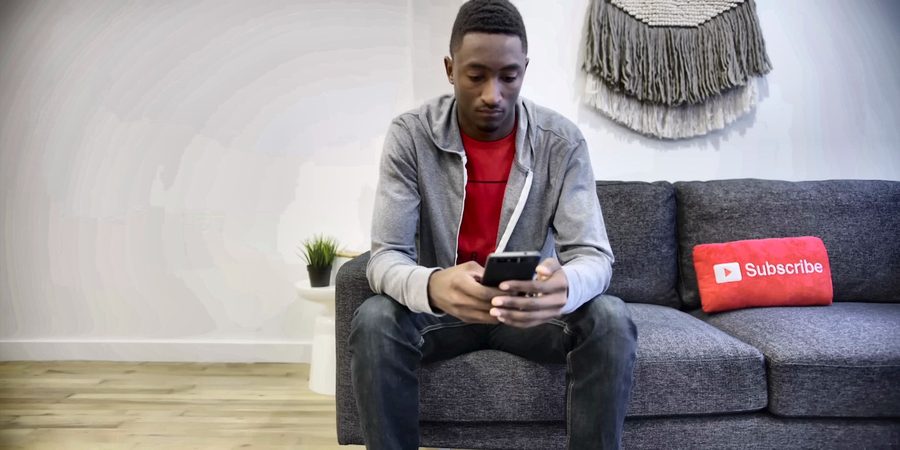
Shot-to-shot color drift measures 27% — the warm studio face-cam and the cooler inserts don't sit in the same grade. Each look is clean on its own (the white balance bias is only 10%); it's the jumps between them that read on every cut.

How — Shot-match hue and exposure across the timeline so cuts between face-cam and inserts stop announcing themselves.
whole video
5
EditH · Editing & Rhythm
The cut never changes gear

The cut rate varies only 20% between the first, middle and final thirds — essentially one tempo for 13 minutes. The hook itself moves (7 cuts in the first 30 s), but after that the edit settles in and stays there.

How — Give the argument a shape — tighten the cut into the payoff sections so the rhythm builds instead of idling.
whole video
STRENGTHS · KEEP DOING THIS

A filler-free, dead-air-free delivery

189 wpm across 2,475 words with zero filler words and not one pause over a second — the longest gap in 13 minutes is 1 s. Voice & Speech scores 92.

Clean studio audio

A −53 dBFS noise floor, 0.00% clipped samples and a perfectly centered stereo image — no hiss, no saturation, nothing to fix at the capture level.

A confident, varied edit

136 shots at 10.2 cuts/min, ASL 5.9 s — right in the talking-head pocket — with strong shot-length variety (coefficient 1.02) and a hook that lands 7 cuts in the first 30 s.

CONTENT ANALYSIS

What the video is actually saying.

A thesis-first argument with a real hook and five clean sections. What's missing is an ending — the video stops on a spoken sign-off, with no recap or end card.
Synopsis
Marques Brownlee argues the slab smartphone has peaked. Using the Oppo Find X9 Ultra as exhibit A, he walks through displays, batteries and cameras to show every flagship converging on the same excellent hardware.
Message
Framed by the opening line — "So this is peak slab phone. For now, anyway." The leaps are over, the gains are increments, and the interesting question is what "peak" means for what comes next.
Intended audience
Tech enthusiasts and flagship-phone buyers — viewers who follow hardware cycles and want an argument, not just a spec sheet.
Emotional arc
Opens on a provocative claim, settles into a measured, exhibit-by-exhibit build through batteries and cameras, and lands on a reflective, open-ended sign-off rather than a verdict.
Themes
smartphonesinnovation plateaubatteriescamerasdisplaysflagship hardware
Structure
Thesis in the first sentence, then a component-by-component case across five detected sections, closed by a spoken sign-off — no recap, no end card.
Strengths
  • The hook is the thesis — the claim lands in the first line
  • Every claim gets a concrete exhibit (silicon-carbon batteries, the 50 MP 10x zoom)
Clichés spotted
  • the "we gotta talk about it" creator-speak opener
  • the stock "catch you in the next one" sign-off where a recap should be
Ways to tighten it Put a plate or stroke behind the spec overlays so the on-screen argument is as legible as the spoken one · build a real outro — a short recap of the thesis before the sign-off, with a card · vary the cut rate between sections so the 13-minute argument has a build, not one tempo.
CHAPTER SUMMARY · 5 SECTIONS DETECTED
Ch.1Peak slab phone — the thesis — the claim lands in the first breath, the Oppo Find X9 Ultra arrives as exhibit A, and displays get the first verdict: everyone has settled on a large, flat, bright OLED.
Ch.2When batteries couldn't last a school day — a short bridge: phones got more efficient, batteries got bigger, and the oldest pain point quietly went away.
Ch.3Silicon-carbon and the camera hardware tour — the two-year battery leap past the old flagship sizes, then the camera system: a 50 MP 10x zoom with sensor-shift stabilization.
Ch.4"As good as a regular camera" — the irony — capable and good quality are two different things, and what Oppo wants you to think this camera is isn't quite what it is.
Ch.5Convenience wins — peak slab phone, for now — computational photography and why versatility is the whole point, closing on the open question: peak slab phone in 2026?

Sections and their boundaries are auto-detected from cut density and audio energy; titles summarize the transcript of each span.

SCORES BY THEME · A–L

Twelve themes, each on a 0–100 dial.

Exposure & Color
Brightness, contrast, white balance.
Sharpness & Technical
Focus and image quality.
Stability & Motion
Camera steadiness, movement.
Composition & Framing
Subject placement, framing.
Audio Loudness
Level & upload-standard compliance.
Audio Quality & Balance
Cleanliness, balance, noise.
Voice & Speech
Pace, fillers, silences.
Editing & Rhythm
Cuts, pacing, dynamics.
On-screen Text
Presence and legibility.
Narrative Structure
Hook, body, ending.
Platform & Metadata
Resolution, codec, aspect.
Accessibility & Safety
Captions, photosensitivity.
STRUCTURE & RHYTHM

The whole video, on one timeline.

This frieze unrolls all 13 minutes left to right, from the real analysis. Top to bottom: structure (hook vs. body), editing rhythm (bars = cut density per 5 s), audio level, and which passages show a face to camera vs. b-roll.
Structure
Rhythm
Sound
Face
0:002:395:197:5810:3713:17
Hook Face to camera B-roll Audio level

Reading: hook 0:00–0:30 · no clean ending · 5 sections · ASL 5.9 s · 135 cuts · 49% face to camera, 51% b-roll.

STORY-BOARD

One real, representative frame per detected section, extracted at the timestamp shown.

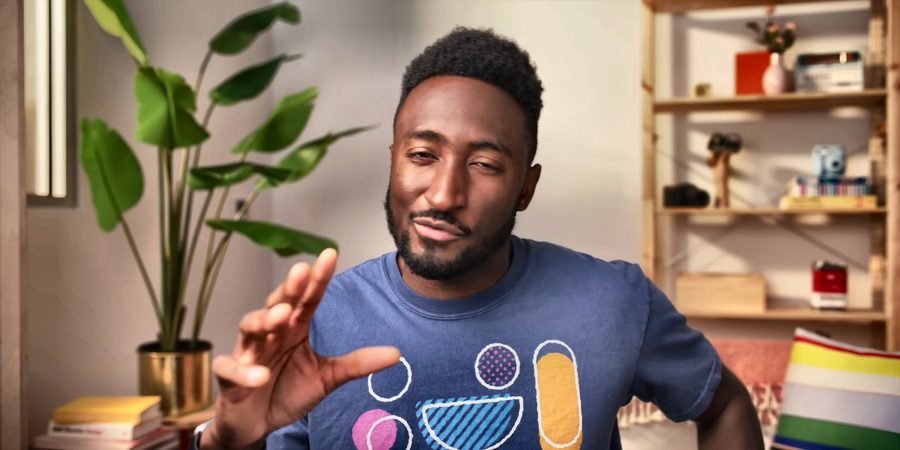
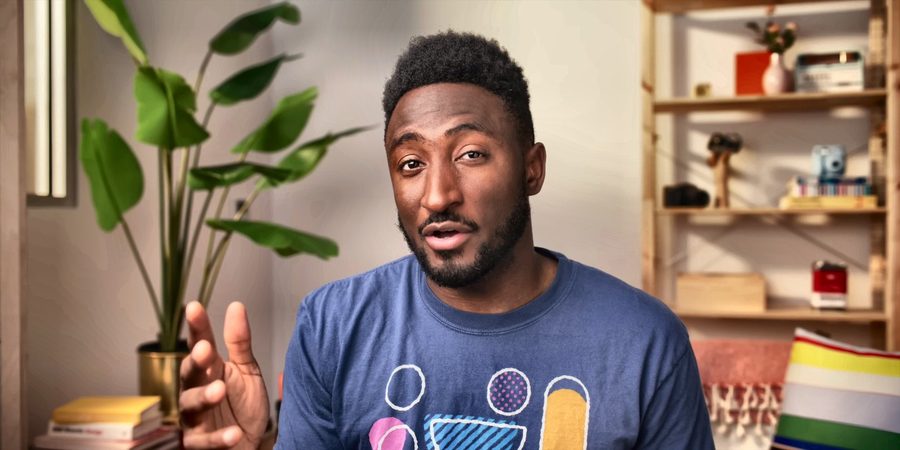
Marques Brownlee speaks straight to camera in his warm-lit studio, mid-gesture, with a plant and shelving behind him
0:00
The thesis, to camera
B-roll insert with a cooler grade: Marques sits on a grey couch in a hoodie, scrolling a phone beside a red Subscribe pillow
3:19
The battery bridge
Marques makes a small pinching gesture to camera while talking through battery sizes
3:52
The silicon-carbon leap
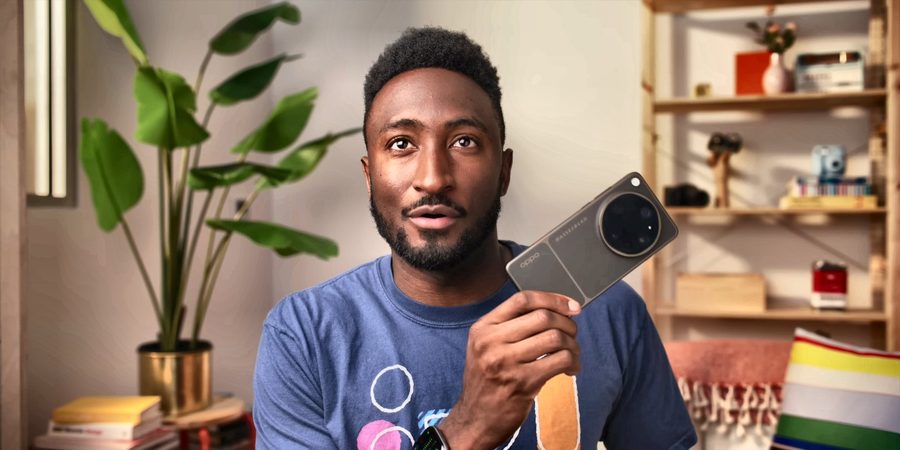
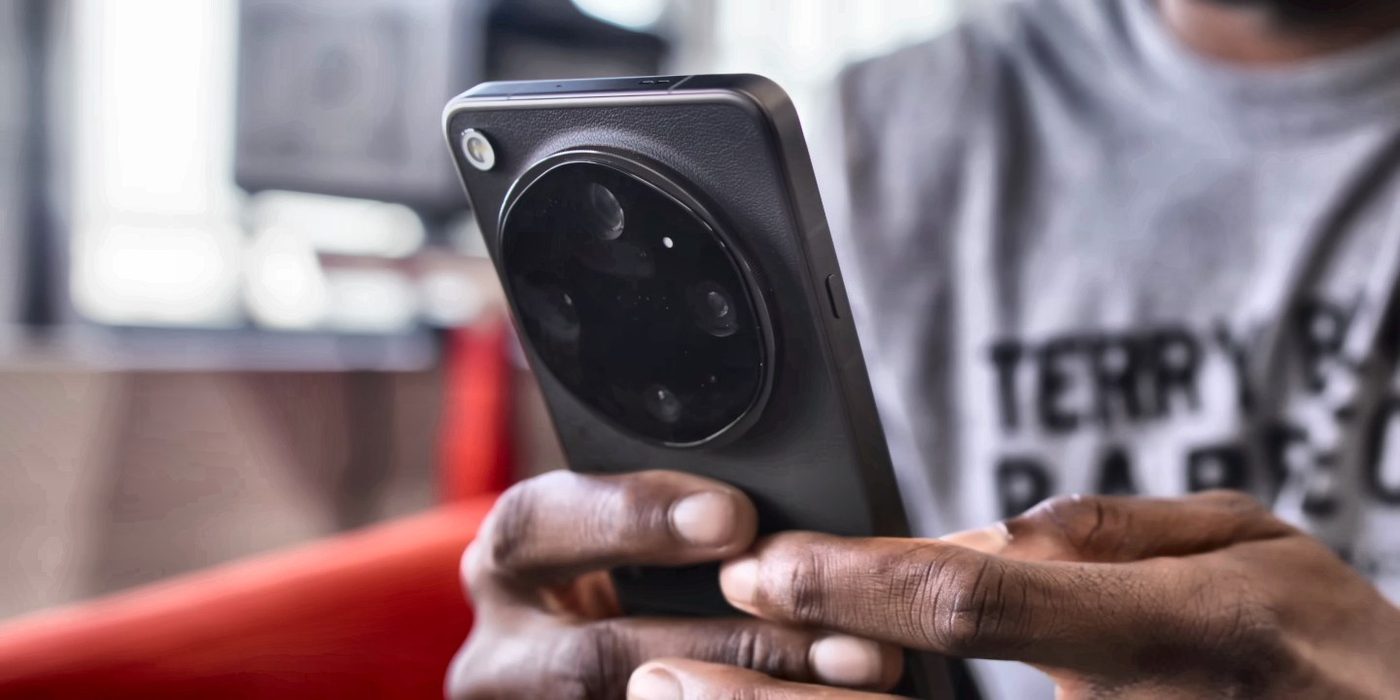
Marques holds up the Oppo Find X9 Ultra, its large circular camera module facing the lens
8:18
Exhibit A, camera first
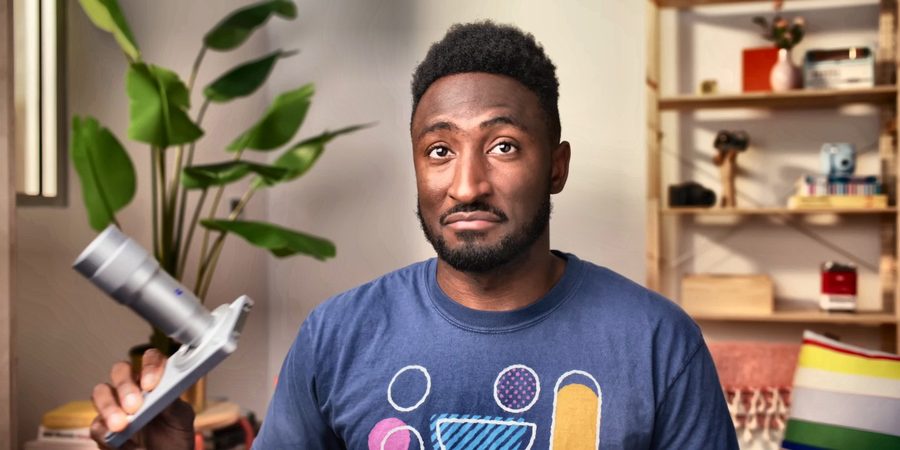
Marques holds a detachable telephoto lens accessory with a skeptical expression
8:51
Camera vs. camera

Frames are pulled straight from the source file at each section's representative timestamp.

EVIDENCE · IMAGE

What it flagged — and what it didn't.

When the engine docks a score it captures the moment. It also tells deliberate style from a defect — when the data can't separate the two, it reports instead of guessing.

A cooler-graded b-roll insert of Marques on a grey couch, visibly different in color from the warm studio shots
3:19A · Color
Grade jump — the cool b-roll insert sits 27% off the warm studio look.
Marques holds up the Oppo Find X9 Ultra in the video's extra-wide 2:1 frame
8:18D · Composition
The 2:1 master — letterboxes on a 16:9 player, graded against the platform target.
Marques speaks to camera in the studio — a held talking-head shot
0:00Not a defect
Stability isn't scored here — at ~3 s between sampled frames, motion is the cut, not the camera. Reported, not penalized.
EVIDENCE · AUDIO

The signal behind the sound.

E · LOUDNESS WAVEFORM −17.7 LUFS · −0.7 dBTP
00:00EBU R128 · TARGET −14 · PEAK −113:17
G · VOICE & PACING
Speaking pace189 wpm
Filler words0 /100 words
Dead-air silences0 > 3s
Background floor−53 dBFS
TRANSCRIPTION · EXCERPT

Auto-transcribed locally (whisper). Language: EN · 2,475 words · 99% speech.

So this is peak slab phone. For now, anyway. We gotta talk about it.
it. And now we've essentially settled on a large, flat, bright OLED. High refresh rate,
over year these days are like in the highest end that you might notice in like graphically
cameras. There's also a second zoom, there's a 50 megapixel 10x camera with sensor shift stabilization,
so great. I'm killing it. That's what computational photography is trying to do. A lot of us, you know,
Peak Slab Phone in 2026? Catch you in the next one. Peace.
DETAILED ANALYSIS

Theme by theme, measure by measure.

Expand any theme for its individual measures, values, and the standards behind them. The blue "good to know" boxes explain the technical terms.

LAccessibility & Safety100
Good
Photosensitivity (screen)17 strong luminance transitions (~1/min, sampled 0.4 fps)100

About one strong flash-like transition per minute — nowhere near photosensitivity risk thresholds, so the theme scores a clean 100.

GVoice & Speech92
Good
Speaking pace189 wpm · 99% speech76

Fast — near the top of the comfortable range, with almost no non-speech air in the runtime. Clean articulation keeps it clear, but the tempo leaves the score a little room.

Good to know Speaking pace is words per minute. ~140–180 reads as energetic-but-clear; above that, clarity depends on enunciation.
Good
Filler words0 fillers (0.0/100 words)100

Not a single um / like / you know across 2,475 words — scripted-grade discipline.

Good to know Filler words are “um / like / you know”. A high rate per 100 words distracts and undercuts authority.
Good
Breathing / silences0 pauses > 3s · longest 1s100

No dead air anywhere: the longest gap in 13 minutes is one second.

KPlatform & Metadata91
Good
Resolution & frame rate3840x1920 @ 30fps100

A 4K-wide master at a steady 30 fps — fully compliant for upload. The unusual height is the 2:1 frame, scored separately under Composition.

Good
Encoding (codec & bitrate)AV1, 3.8 Mbps (AV1 target ~20)82

The bitrate sits well under the ~20 Mbps AV1 reference, but the codec is efficient and no artifacts show (blocking 2.1%) — acceptable, with headroom if fine detail ever smears.

FAudio Quality & Balance87
Good
Background noise / hissfloor ~−53 dBFS76

A genuinely quiet studio floor — no audible hiss under the voice.

Good to know The "noise floor" is the level of the quiet parts. Closer to silence (lower dBFS) is cleaner; outdoors it naturally sits higher.
Good
Stereo balance+0.0 dB (right)100

Perfectly centered — no left/right imbalance.

HEditing & Rhythm86
Info
Shot segmentation136 shots · 10.2 cuts/min

A measured clip for a talking-head — roughly one cut every six seconds, mixing held face-cam with quick inserts.

Good
Average shot length (ASL)5.9s (target 3–20s · talking-head)100

Comfortably inside the talking-head window — brisk enough to hold attention, long enough to let the argument breathe.

Good to know A “shot” is the span between two cuts. ASL is the average shot length — lower means a faster cut.
Good
Shot-length varietyvariation coefficient 1.02100

Long held takes mixed with quick inserts — the variety keeps the eye engaged.

Info
Rhythm curvedynamics 0.8 (cuts / 5s)

The per-5-second cut density the structure frieze above is drawn from.

Good
Hook strength (0–30s)7 cuts in 30s100

The open is one of the densest stretches of the edit — the promise is made quickly.

Good
Pattern interrupts50% of runtime in long shots (>8s)88

Half the video sits in held shots — normal for the format, and the b-roll inserts break them up often enough to score well.

Fix
Editing progressionflat rhythm (20% variation across thirds)46

The cut rate barely moves between the first, middle and final thirds. Building the rhythm toward the payoff would give the argument shape — see priority 5.

Info
Jump cuts6 shots < 1s (4% of shots)

A handful of sub-second cuts — an accent, not a tic.

Info
B-roll / face-cam ratio~51% b-roll · 49% face to camera

An even split between face-cam and inserts — healthy coverage for a commentary piece.

AExposure & Color86
Good
Exposure (overall)mean luminance 44%100

A controlled studio exposure sitting just under middle grey — consistent across the runtime.

Good to know Exposure is how much light is in the image — neither crushed (lost shadow detail) nor "blown" (white with no detail).
Good
Blown highlights1.1% clipped pixels100

Practically nothing blows out — the warm practicals stay under control.

Good
Crushed shadows0.5% crushed pixels100

Shadow detail survives the moody studio look.

Good
Dynamic range usedspread 77%77

The image uses most of the available range, with a little headroom left by design.

Good
ContrastRMS contrast 0.21100

Healthy contrast for a lit studio scene.

Watch
White balancewarm (red) cast 10%72

A consistent 10% warm bias — part of the studio look, but worth a neutral check on skin tones.

Good to know White balance is the overall colour temperature — a cast pulls the whole image warm or cool.
Good
Saturationmean saturation 33%100

Natural color — saturated enough to pop without pushing.

Fix
Color consistencydrift 27%26

The warm studio face-cam and the cooler inserts don't share a grade — the 27% drift is the gap the cuts keep exposing. Shot-match across the timeline (priority 4).

Good
Chroma noisecolor-noise index 0.8100

Clean chroma — no color speckle in the shadows.

BSharpness & Technical85
Watch
Sharpness / focussubject sharp in 85% of usable shots51

Most of the video is crisp; the remainder reads soft enough to dock the measure. Worth a pass to cut or sharpen the softest inserts.

Good to know “Sharpness” is how crisp the detail is — soft footage often means missed focus or an upscale.
Good
Out-of-focus shots15% of shots missed focus (dark shots excluded)78

The same softness from the other direction: 15% of shots miss the plane, with dark shots excluded from the count.

Good
Noise (ISO grain)noise sigma 0.4100

No visible ISO grain — a well-lit sensor.

Good
Compression artifactsblocking 2.1% (8×8 grid)100

A clean encode — no visible macroblocking.

Good
Real definition (upscale?)HF detail 29.6% · ~2160p effective / 1920p100

High-frequency detail out-resolves the container's 1920-pixel height — genuine 4K-wide capture, not an upscale.

EAudio Loudness83
Watch
Integrated loudness−17.7 LUFS (target −14)66

Mastered about 3.7 LU quiet, so it can play softer than neighboring videos — raise the master toward −14.

Good to know LUFS measures perceived loudness over the whole video. Platforms normalize toward −14 LUFS.
Good
True peak−0.7 dBTP (max −1)85

A hair over the −1 guideline — no audible consequence, and a true-peak limiter at −1 makes it textbook.

Good to know True peak (dBTP) estimates the real peak between samples; over −1 risks clipping on transcode.
Good
Loudness range (dynamics)4.4 LU100

Tight, consistent dynamics — right for a speech-led mix.

Good
Audio clipping0.00% clipped samples100

Nothing saturates anywhere in the mix.

Watch
Level consistencylevel jumps up to 21 dB (p95 7 dB)68

Most transitions stay within 7 dB, but the largest jumps reach 21 dB — worth riding the loudest few so no segment startles.

JNarrative Structure83
Good
Structure (hook · body · outro)hook present · no clean ending77

The thesis lands in the first line — a real hook — but the video stops on a spoken sign-off with no recap or end card.

Good
Chaptering5 narrative sections detected100

The argument segments cleanly into five sections — easy to follow, and ready-made for YouTube chapter markers.

Info
Branding (intro / outro)no intro · no outro

No branded intro or outro detected — reported, not scored; for an established channel that's a stylistic choice.

Info
Call-to-action (ending)likely spoken CTA at the end

"Catch you in the next one" reads as a verbal call-to-action — nothing on screen backs it up.

Watch
Sustained engagement / tensionhook, re-engagement, variety, audio74

The hook and shot variety help; the flat rhythm progression and the missing ending are the drags.

DComposition & Framing68
Good
Rule of thirds / placement5% off the power points100

The subject sits almost exactly on the thirds, shot after shot.

Info
Frame clutteredge density 13%

A tidy frame — the set dressing stays behind the subject, not on top of him.

Good
Headroom / face framing~19% space above the head85

Slightly generous headroom, still well within a comfortable talking-head frame.

Fix
Aspect ratio2:1 → 16:9 (landscape)19

The signature 2:1 frame, graded against the 16:9 platform target — it letterboxes on standard players (priority 3). A deliberate trade, but a scored one.

CStability & Motion60
Info
Stabilitynot scored at this sampling (0.38 fps, ~3s between frames) — inter-shot motion, not shake

At ~3 s between sampled frames, frame-to-frame motion measures different shots, not camera shake — so the engine reports it instead of scoring it.

Good to know Measuring true shake needs frames close together in time; on long videos it’s read from motion fluidity.
Fix
Micro-jitterresidual jitter 174.1 px (p75)0

Residual nudges reach 174.1 px at the 75th percentile — visible nervousness on the handheld shots, and the theme's one hard fail (priority 1).

Good
Motion fluidityspeed irregularity 0.7683

The camera moves themselves are smooth — the jitter is layered on top of otherwise fluid motion.

Info
Movement typeshoulder-mounted (handheld)

Detected as handheld — informational, but it raises the bar on stabilization.

Good
Horizon levelhorizon ~+0.0°100

Dead level throughout.

IOn-screen Text50
Info
On-screen text presencetext on ~22% of shots · 84 overlays read

Text does real work here — spec callouts and labels on roughly a fifth of the shots.

Fix
Text legibility (contrast)median contrast 2.6:1 · 94% below 4.5:10

Almost every overlay sits below the 4.5:1 readability guideline — the single biggest fix in the report (priority 2).

Good to know Contrast is the brightness gap between text and what’s behind it; ~4.5:1 keeps it readable.
Good
Line lengthmedian line 6 chars (max 24)100

Short, scannable lines — the writing side of the overlays is fine; only the contrast fails.

YOUR TURN

Get a report like this for your video.

Same depth, weighted for whatever you make. Join the waitlist for early access to the hosted dashboard and API.