COACHING REPORT · REAL EXAMPLE

Mac — Great ideas start here

Cinematic / brand film APPLE · 1.8M VIEWS · AUTO-DETECTED 100%
DURATION 1:33RESOLUTION 2880×2160FPS 24VIDEO AV1AUDIO OpusCUTS 72

A 93-second anthem film built on one refrain — "I've got this all under control" — cut 72 times across high-pressure, about-to-commit moments. Composition and delivery are flawless and the master is impeccably clean. What drags the score is the film's own language meeting the meters: shallow-focus frames that read soft, handheld jitter, in-scene text far below legibility thresholds, and a 2.0 Mbps stream that's thin for 2160p. Here's the full read — and which flags are style versus genuine fixes.

Tap any timecode to see the moment

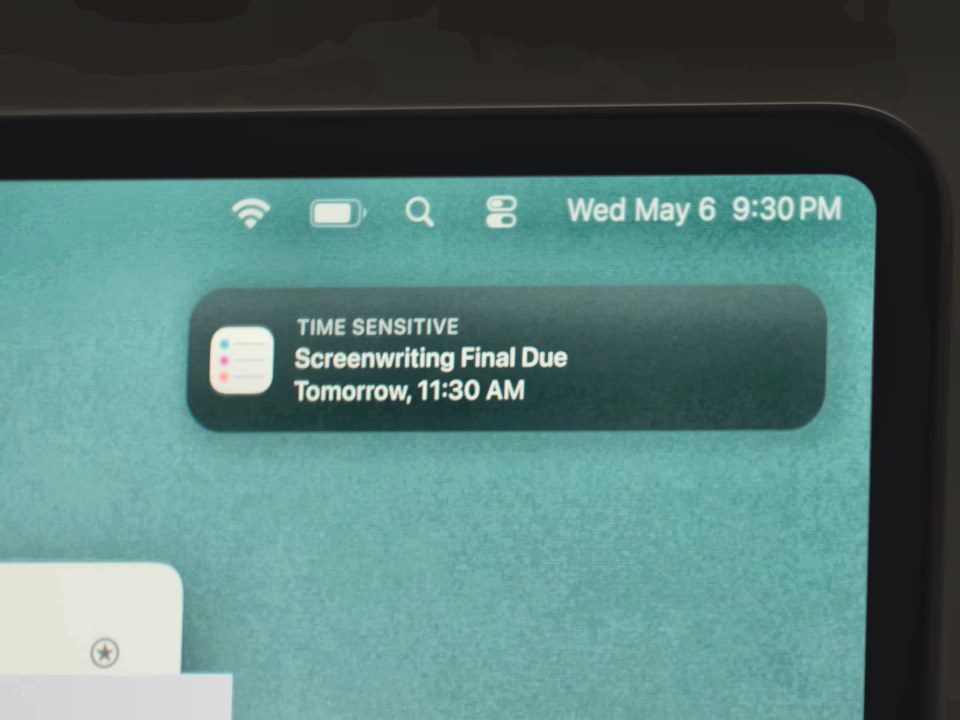
Frame from Apple's Mac — Great ideas start here: close-up of a Mac menu bar showing a Time Sensitive notification, Screenwriting Final Due Tomorrow, 11:30 AM
OVERALL · 12 THEMES · WEIGHTED FOR CINEMATIC
AT A GLANCE

Every theme, ranked by score.

Each theme is the average of its measures. The global score is then weighted for the auto-detected genre — for a cinematic / brand film, the weighting follows what matters most for that format.

ThemeScore/100Verdict
DComposition & Framing100Excellent
GVoice & Speech100Excellent
AExposure & Color87Strong
FAudio Quality & Balance85Strong
HEditing & Rhythm78Good
JNarrative Structure74Good
EAudio Loudness71Good
BSharpness & Technical58Fair
IOn-screen Text50Weak
KPlatform & Metadata50Weak
CStability & Motion47Weak
LAccessibility & Safety29Weak
How to read this report Each measure is scored out of 100 against technical references (upload standards, EBU R128 loudness, WCAG legibility…) and subjective analysis (aesthetics, narrative). Measures are grouped into themes (theme = average of its measures); the global score is a weighted average based on the detected genre. Thresholds adapt to that genre too: a cinematic brand film isn't judged like a studio talking-head, so a deliberately low-key grade and a music-led narration aren't treated as defects. A score is decision-support, not a popularity ranking.
SYNTHESIS

A flawless film and a perfect score are different things. Composition and delivery both hit 100 and the master is clean and headroom-safe — but the film's own language (flash cuts, shallow focus, handheld energy, low-key light) trips exactly the meters built to catch defects. The report's job here is to say which flags are style, and which — the thin encode, the illegible in-scene text — are worth acting on.

COMPOSITION 100/100 TRUE PEAK −3.6dBTP RHYTHM ASL 1.3s SHARP SHOTS 49% BITRATE 2.0Mbps
YOUR PRIORITIES · 5 ADVISORIES

Fix these first, in this order.

Quick win = fast re-export tweak · Edit = fix in post · Shoot = may need a reshoot.

1
ShootB · Sharpness
Half the shots read out of focus

On 51% of usable shots the point of focus misses the subject (dark shots are excluded before counting). Much of this is the film's shallow depth of field — a deliberate look — but it's measured against a threshold built for crisp subjects, and it's the single biggest drag on the score.

How — Where sharpness matters, lock focus (or eye-AF) on the subject and cut the softest takes; own the rest as style.
whole video
2
EditC · Stability
Residual jitter rides on the handheld look

High-frequency judder reaches 37.9 px (p75) on top of the intentional camera movement. That's the part of the shake that reads as noise rather than energy — most visible on large screens and slow connections.

How — A light stabilization pass tuned to kill jitter while keeping the handheld drift — or a steadier rig on set.
whole video
3
EditI · On-screen Text
On-screen text sits far below the legibility bar

Median text contrast is 1.3:1, and 98% of detected text falls under the 4.5:1 readability threshold. Most of it is in-scene set dressing — screens, notifications, notebooks — but anything a viewer is actually meant to read won't survive a phone screen.

How — Add a stroke, drop-shadow or semi-opaque plate behind any informational text (aim ≥ 4.5:1).
27% of shots
4
Quick winK · Platform
The stream carries a tenth of the bitrate it should

The analyzed file is AV1 at 2.0 Mbps against a ~20 Mbps target for 2160p. The dark, grain-free grade hides most of it, but blocking already shows in the flattest areas (6.1%) and fine texture has nowhere to live.

How — Upload a higher-bitrate master — one export setting, no re-edit.
whole file
5
ShootEditB · Sharpness
The subject is crisp on barely half the usable shots

The companion sharpness read finds the subject sharp on 49% of usable shots (dark shots excluded), scoring 4/100 against the cinematic reference. Together with advisory #1, this is the meter taking the film's shallow-focus language literally.

How — Check focus on the hero subject, avoid upscaling, and lift borderline shots with a light sharpening pass.
whole video
STRENGTHS · KEEP DOING THIS

Textbook composition

Subjects sit 8% off the power points, frames stay clean (edge density 5%) and the 4:3 frame is delivered intact. Composition & Framing scores a perfect 100.

A controlled, scripted delivery

Zero filler words across the film's 51 spoken words, 48 wpm over 69% speech — narrative dialogue that never wastes a line. Voice & Speech scores 100.

A clean, headroom-safe master

−16.0 LUFS with true peak at −3.6 dBTP and 0.00% clipped samples — nothing will distort on transcode — and the stereo image sits perfectly centered.

CONTENT ANALYSIS

What the video is actually saying.

A clean two-part arc with an identifiable close. The engine reads the cold open as soft — the promise only lands once the song does, at 0:30.
Synopsis
A rapid montage of people at the moment of maximum pressure — seconds before committing to a bold, risky idea — scored to a song that keeps repeating "I've got this all under control." The Mac is the tool they reach for when they decide to go.
Message
Great ideas start here — the Mac as the machine you bet on when the stakes are highest.
Intended audience
Prospective Mac buyers at decision moments — students, creators, founders — addressed at brand level rather than spec level.
Emotional arc
Opens on confrontation and a bleeped outburst, tightens through escalating commit-or-quit vignettes, then releases as the refrain turns anxiety into confidence.
Themes
ambitionpressurecontrolriskcreativityconfidence
Structure
An 11-second hook (the stand-off and the bleeped line), then a single montage body carried by the song. It closes on a brand outro with no CTA — standard for the format.
Strengths
  • One repeatable refrain carries the entire film
  • High shot variety at speed keeps the montage breathing
Conventions spotted
  • the bleeped-outburst tension beat
  • montage-to-anthem build closing on a logo, not a CTA
Ways to tighten it Plate or stroke any text the viewer is meant to read — the median on-screen contrast is 1.3:1 against a 4.5:1 bar · ship a higher-bitrate master — the 2.0 Mbps AV1 stream is a tenth of the 2160p target · ease the harshest light transitions (~22 strong flashes per minute) or add a photosensitivity advisory.
CHAPTER SUMMARY · 2 SECTIONS DETECTED
Ch.1Stand-offs, a bleep, and the mantra kicks in — the film opens mid-confrontation ("You don't need to go through me"), a bleeped outburst lands the stakes, and at 0:30 the song's refrain — "this is all under control" — takes over.
Ch.2Under control, all the way to the close — the montage rides the repeating "I've got this all under control" through escalating commit-or-quit moments, up to the brand sign-off.

Sections and their boundaries are auto-detected from cut density and audio energy; titles summarize the transcript of each span.

SCORES BY THEME · A–L

Twelve themes, each on a 0–100 dial.

Exposure & Color
Brightness, contrast, white balance.
Sharpness & Technical
Focus and image quality.
Stability & Motion
Camera steadiness, movement.
Composition & Framing
Subject placement, framing.
Audio Loudness
Level & upload-standard compliance.
Audio Quality & Balance
Cleanliness, balance, noise.
Voice & Speech
Pace, fillers, silences.
Editing & Rhythm
Cuts, pacing, dynamics.
On-screen Text
Presence and legibility.
Narrative Structure
Hook, body, ending.
Platform & Metadata
Resolution, codec, aspect.
Accessibility & Safety
Captions, photosensitivity.
STRUCTURE & RHYTHM

The whole video, on one timeline.

This frieze unrolls all 93 seconds left to right, from the real analysis. Top to bottom: structure (hook vs. body), editing rhythm (bars = cut density per 5 s), audio level, and which passages show a face to camera vs. b-roll.
Structure
Rhythm
Sound
Face
0:000:190:370:561:151:33
HookFace to cameraB-rollAudio level

Reading: hook 0:00–0:11 · identifiable outro · 2 sections · ASL 1.3 s · 72 cuts · 21% face to camera, 79% b-roll.

STORY-BOARD

One real, representative frame per detected section, extracted at the timestamp shown (clap-style hours:minutes:seconds:frames).

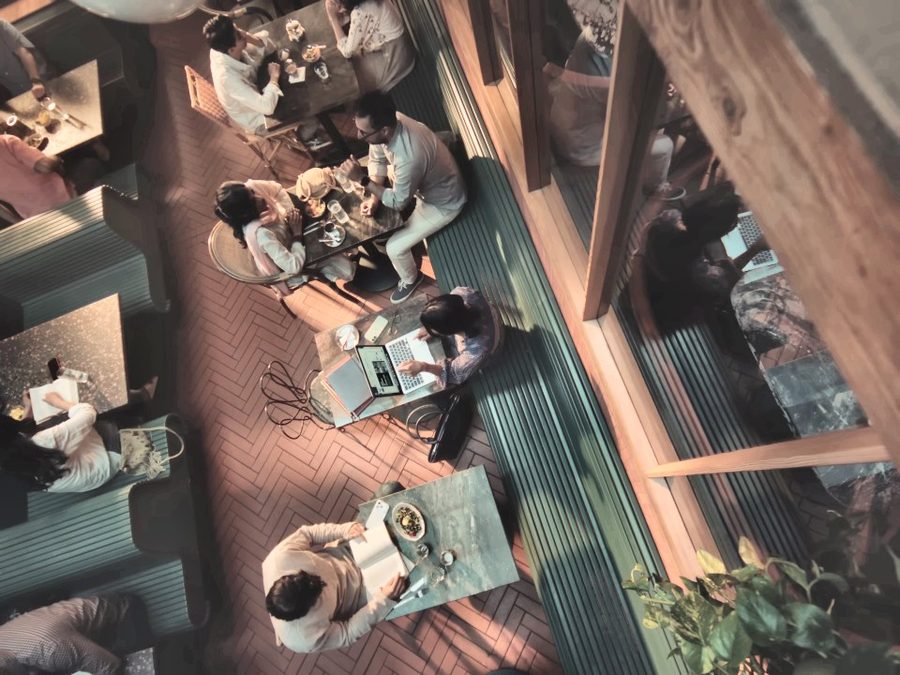
Overhead view of a warm-lit café where people work at laptops and notebooks among the tables
00:00:00:00
Where the ideas start — the café
Shallow-focus close-up of a hand with silver rings typing on a MacBook keyboard
00:00:40:00
Hands on the keyboard

Frames are pulled straight from the source file at each section's representative timestamp.

EVIDENCE · IMAGE

What it flagged — and what it didn't.

When the engine docks a score it captures the moment. It also tells deliberate style from a defect — the low-key exposure and the scene-by-scene grade here are read as intent, not penalized.

Close-up of a hand on a MacBook keyboard with most of the frame in soft focus
00:00:40:00B · Sharpness
Shallow focus — the subject reads sharp on 49% of usable shots.
Mac menu bar with a Time Sensitive notification reading Screenwriting Final Due Tomorrow, 11:30 AM
THROUGHOUTI · On-screen Text
In-scene UI text — 281 overlays read; median contrast 1.3:1, 98% below 4.5:1.
Warm amber-graded overhead café scene, distinctly different in palette from the rest of the film
00:00:00:00Not a defect
The grade evolves scene by scene (drift 74%) — read as intentional multi-scene grading.
EVIDENCE · AUDIO

The signal behind the sound.

E · LOUDNESS WAVEFORM −16.0 LUFS · −3.6 dBTP
00:00EBU R128 · TARGET −14 · PEAK −11:33
G · VOICE & PACING
Speaking pace48 wpm
Filler words0 /100 words
Silences > 3s2 · max 12s
Background floor~−39 dBFS
TRANSCRIPTION · EXCERPT

Auto-transcribed locally (whisper). Language: EN · 51 words · 69% speech.

You don't need to go through me.
I'm so [bleeped].
This is all under control
I've got this all under control
DETAILED ANALYSIS

Theme by theme, measure by measure.

Expand any theme for its individual measures, values, and the standards behind them. The blue "good to know" boxes explain the technical terms.

DComposition & Framing100
Good
Rule of thirds / placement8% off the power point100

Subjects land almost exactly on the thirds across 73 shots — an 8% average offset is reference-grade framing for a montage this fast.

Info
Frame clutteredge density 5%

Frames stay clean and uncluttered — very low edge density keeps the eye on one subject per shot, exactly what this photography is going for.

Good
Aspect ratio4:3 → 4:3100

The 2880×2160 master is a true 4:3 frame, delivered intact — no crop, no letterbox mismatch.

GVoice & Speech100
Info
Speaking pace48 wpm · 69% speech (narrative dialogue)

Slow on paper, but this is sung-and-spoken narrative dialogue, not commentary — the engine reads it as narrative and doesn't hold the pace against it.

Good to know Speaking pace is words per minute. ~140–180 reads as energetic-but-clear; a music-led brand film naturally runs far lower.
Good
Filler words0 fillers (0.0/100 words)100

Nothing wasted across the film's 51 words — every line is scripted and lands.

Good to know Filler words are “um / like / you know”. A high rate per 100 words distracts and undercuts authority.
Info
Breathing / silences2 silence(s) > 3s · longest 12s (normal for narrative)

Two long speech gaps where the music carries the film — expected in this format, so they're reported, not penalized.

AExposure & Color87
Info
Exposure (overall)mean luminance 23% · deliberately low-key exposure (mood)

The film sits dark by design — night interiors, lamplight, screens. The engine reads the low-key look as intent and reports it instead of docking it.

Good to know Exposure is how much light is in the image — neither crushed (lost shadow detail) nor "blown" (white with no detail).
Good
Blown highlights0.0% clipped pixels100

Not a single blown highlight — practicals and screens are all held with full detail.

Info
Crushed shadows5.5% crushed pixels · deep blacks embraced

Deep blacks are part of the grade; flagged as informational because the crush is clearly a choice, not an error.

Watch
Dynamic range usedspread 53%53

The histogram uses about half the available range — a side effect of the low-key grade. Fine for mood, but it leaves contrast headroom on the table.

Good
ContrastRMS contrast 0.1488

Healthy micro-contrast even inside the dark palette — the frames never go muddy.

Good
White balancewarm (red) cast 8%83

A gentle warm bias consistent with the tungsten-and-lamplight look — cohesive, not a cast to correct.

Good to know White balance is the overall colour temperature — a cast pulls the whole image warm or cool.
Good
Saturationmean saturation 30%100

Restrained, cinematic color — alive without ad-grade punch.

Info
Color consistencydrift 74% · the grade evolves scene by scene

The palette shifts deliberately from vignette to vignette — many locations, many looks. Read as multi-scene grading, not drift to fix.

Good
Chroma noisecolor-noise index 0.4100

Effectively no color noise, even in the darkest frames.

FAudio Quality & Balance85
Watch
Background noise / hissfloor ~-39 dBFS72

The quietest passages sit around −39 dBFS — a touch above a pristine studio floor, though the music bed masks it for most of the film.

Good to know The "noise floor" is the level of the quiet parts. Closer to silence (lower dBFS) is cleaner; outdoors it naturally sits higher.
Good
Stereo balance-0.0 dB (left)100

Perfectly centered — no left/right imbalance.

HEditing & Rhythm78
Info
Shot segmentation73 shots · 46.2 cuts/min

A 93-second film cut 72 times — full montage pacing, reported as context for the measures below.

Watch
Average shot length (ASL)1.3s (target 3-12s · cinematic)57

Far quicker than the cinematic reference band — deliberate for an anthem montage, but it's the main reason this theme isn't higher.

Good to know A “shot” is the span between two cuts. ASL is the average shot length — lower means a faster cut.
Good
Shot-length varietycoefficient of variation 0.79100

Longer holds against rapid flurries — the cut breathes even at this speed.

Info
Rhythm curvedynamics 1.9 (cuts / 5s)

Cut density swells and releases with the song rather than running flat — the rhythm row in the frieze shows the wave.

Good
Hook strength (0–30s)22 cuts in 30s88

The opening 30 seconds cut hard — the montage announces its pace immediately.

Good
Pattern interrupts0% of runtime in long shots (>8s)100

No shot overstays — nothing on screen long enough for the eye to drift.

Fix
Editing progressionstable rhythm (26% variation across thirds)49

The pace doesn't escalate from first third to last — the film starts fast and stays fast. A clearer acceleration into the close would give the ending more lift.

Info
Jump cuts38 shots < 1s (52% of shots)

Over half the shots last under a second — flash-cut montage language, reported rather than judged for this genre.

Info
B-roll / face-cam ratio~79% b-roll · 21% face to camera

Faces surface in beats rather than anchoring the film — characteristic of an anthem spot.

JNarrative Structure74
Watch
Structure (hook · body · outro)weak hook · identifiable ending/outro73

The opening seconds are a confrontation whose meaning only lands once the song does — the engine reads that open as soft, while the brand close registers as a clear outro.

Good
Chaptering2 narrative section(s) detected80

Setup, then mantra-driven montage — a clean two-part arc that is exactly the shape of the film.

Good to know This measures detected narrative sections, not YouTube chapter markers — a clear, well-segmented arc, which this has.
Info
Branding (intro / outro)no intro · outro present

No opening logo, but a clear brand close — the standard shape for this format.

Info
Call-to-action (ending)no CTA (not expected for this format)

Brand films end on the line, not on a "subscribe" — reported, not penalized.

Watch
Sustained engagement / tensionhook, re-hooks, variety, audio71

Shot variety and the swelling track do the retention work; the soft open is the main drag on this composite.

EAudio Loudness71
Good
Integrated loudness-16.0 LUFS (target -14)88

A conservative 2 LU under the platform target — safe; nothing will be turned down on upload.

Good to know LUFS measures perceived loudness over the whole video. Platforms normalize toward −14 LUFS.
Good
True peak-3.6 dBTP (max -1)100

Plenty of headroom — no transcode-clipping risk at all.

Good to know True peak (dBTP) estimates the real peak between samples; over −1 risks clipping on transcode.
Fix
Loudness range (dynamics)17.3 LU12

Very wide dynamics — near-whispered dialogue against a full-band climax. Cinematic by design, but on phone speakers the quiet lines risk disappearing; gentle bus compression would protect them.

Good
Audio clipping0.00% clipped samples100

A clean master — zero saturated samples.

Watch
Level consistencylevel jumps up to 19 dB (p95 8 dB)58

Section-to-section steps are large — the same root cause as the wide loudness range. Riding the quietest dialogue up a few dB would smooth it without flattening the build.

BSharpness & Technical58
Fix
Sharpness / focussubject sharp on 49% of usable shots · dark shots excluded4

Half the gradable shots read soft. In this film much of that is shallow depth of field and motion — a stylistic bet — but the meter can only report what's sharp.

Good to know “Sharpness” is how crisp the detail is — soft footage often means missed focus or an upscale.
Fix
Out-of-focus shots51% of shots miss focus (dark shots excluded)0

The complement of the read above: cinematic bokeh and rack-focus moments register as misses against a threshold built for crisp subjects.

Good to know "Out of focus" means the subject isn't sharp — often AF hunting on movement, or a missed manual pull.
Good
Noise (ISO grain)noise sigma 0.2100

Essentially noiseless, even in the darkest scenes.

Good
Compression artifactsblocking 6.1% (8×8 grid)88

Light blocking traces in the flattest dark areas — a symptom of the 2.0 Mbps stream, still within clean.

Good
Real definition (upscale?)HF detail 30.2% · ~2160p effective / 2160p100

High-frequency detail confirms a genuine 2160p-class master — not an upscale.

IOn-screen Text50
Info
On-screen text presencetext on ~27% of shots · 281 overlays read

A lot of incidental text — screens, notifications, notebooks — rather than designed captions; the OCR reads everything visible in frame.

Fix
Text legibility (contrast)median contrast 1.3:1 · 98% below 4.5:10

Nearly all of that text sits far below the readability bar. Most was never meant to be read — but anything informational needs a plate or stroke to survive small screens.

Good to know Contrast is the brightness gap between text and what’s behind it; ~4.5:1 keeps it readable.
Good
Line lengthmedian line 6 chars (max 50)100

Short lines throughout — nothing approaches the 50-character readability ceiling.

KPlatform & Metadata50
Good
Resolution & frame rate2880x2160 @ 24fps100

A 4:3, 24 fps cinema master at full 2160p height — exactly what the format calls for.

Fix
Encoding (codec & bitrate)av1, 2.0 Mbps (AV1 target ~20)0

The analyzed stream carries a tenth of the recommended bitrate for 2160p AV1. The grade survives because the film is dark and grain-free, but fine texture has no headroom — upload a higher-bitrate master.

CStability & Motion47
Fix
Stabilitymedian shake 15.8 px · 35 very unstable shot(s)/7339

Half the shots register heavy movement. Much of it is the handheld, in-the-moment camera language the film is built on — but the meter scores what it sees.

Good to know Measuring true shake needs frames close together in time; on long videos it’s read from motion fluidity.
Fix
Micro-jitterresidual jitter 37.9 px (p75)0

High-frequency judder on top of the intentional movement — the part a stabilization pass could remove without killing the handheld feel.

Watch
Motion fluidityspeed irregularity 1.2351

Camera speed changes abruptly rather than easing in and out — consistent with the run-and-gun coverage.

Info
Movement typeshoulder / handheld camera

Detected as handheld throughout — fitting for the energy, and it sets the genre expectations for the stability reads above.

Good
Horizon levelhorizon ~+0.0°100

Dead level — no persistent tilt despite the handheld work.

LAccessibility & Safety29
Fix
Photosensitivity (screen)34 strong luminance transitions (~22/min, sampled at 2.0 fps)29

The flash-cut montage produces rapid bright-dark swings at a rate that can trouble photosensitive viewers. Ease the harshest transitions, or add an advisory before broad distribution.

YOUR TURN

Get a report like this for your video.

Same depth, weighted for whatever you make. Join the waitlist for early access to the hosted dashboard and API.